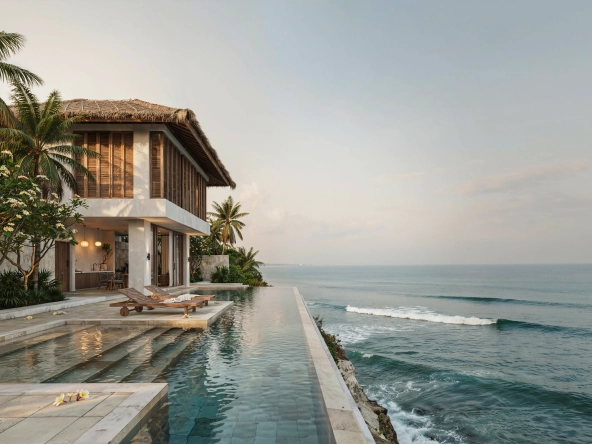

Building in Bali as a way to level up your investment is no longer a new and shocking trend. In fact, it has been an ever-growing dream that every investor puts their money into. The discussion now is no longer a surface-level one, but rather about how you can navigate your investment better so you’ll get the most out of your investment. The short and most essential advice is: find the best architect in Bali to work with.
For instance, you’re building a private residence in Pererenan or even a commercial aesthetic clinic in Uluwatu. You gotta work with the right architect. Or else, you’re just gonna be wasting capital.
It’s not about “just building” something, but working with the “best architect in Bali” could offer you more than just aesthetics, but also security and compliance. To avoid getting on the wrong foot, here are some red flags to avoid when choosing to work with the right partner. So without further ado, let’s get into it.

We hope you enjoy this article.
Need more expert guidance and hundreds of top properties in Bali?
Red Flag #1: Ignoring the PBG and Legal Zoning Constraints
Before the building process, ensure this has been completed: your legal permit to build. Because if a firm suggests building before the permit is issued, you’re risking your entire investment. As advised by the Indonesian Institute of Architects (IAI), the Indonesian government has renewed the legal permit regarding building property.
Before, you will be required to have an IMB (Izin Mendirikan Bangunan) or “Building Construction Permit” before the process. Following this regulation, you’re now also required to have the PBG (Persetujuan Bangunan Gedung) or the “Building Approval”. Acquiring a legal permit also includes land due diligence, checking the legitimacy of the zoning certificate, and considering coastal setbacks
To put it simply, IMB focuses on obtaining a permit before building, and the PBG ensures that all constructions pass the technical criteria. Construction should comply with the technical standards, such as safety, utility, and spatial layout.
See Also: Land zoning in Bali you must know
Red Flag #2: Designing for Instagram, Not for 90% Humidity
One thing about Bali weather: it’s humid. So, building a European-style-inspired house just won’t work. The intense tropical humidity will cause severe mould and rising damp in masonry. Take the coastal areas like Bingin, for example. Heavily closed western style building won’t work with the salt air.
In a tropical climate, it is best to build and apply tropical modernism instead. Adding passive cooling and cross-ventilation helps your house sustain longer. Following this step, you can also build with moisture-resistant materials like Ulin wood and Kerobokan stone (which are locally sourced).
So, work with firms that prioritise solid structural engineering and soil stability over just aesthetic design that won’t last and won’t work with the hot and humid weather.
Red Flag #3: Missing Technical Depth in MEP and Structural Plans
Another essential point you should not miss: MEP and structural plans. Understand that a “pretty picture” is not a blueprint. A professional set should include MEP (Mechanical, Electrical, Plumbing. MEP turns empty rooms in a building into safe, liveable spaces. With proper MEP design, you can increase energy efficiency, thereby reducing long-term operational costs. This can also ensure compliance with the building’s safety regulations. Start safe and with a legit structure, for a sustainable build. You don’t want to expect a foundational rot due to a poor drainage system in a rice-field development.
A well-designed MEP includes a technical drawing set, load-bearing calculations, drainage solutions, and wastewater management (SPT). MEP serves as a backbone of modern construction, making sure a place is not just habitable but also safe and sustainable.
Red Flag #4: Lack of Weekly Site Supervision (Pengawasan)
Site supervision (pengawasan) is key. This does not mean that you don’t trust your contractors, it simply means that you put serious endeavors in building correctly. Have your architect be your “policeman” on site. To keep your progress aligned with the initial design. Building in Bali is not a plug and play, physical presence is needed to ensure all processes match the drawing and structure.
If your firm only emails you drawings from an office in Jakarta or overseas, problems may arise. Without strong contractor communications, problems will arise on-site. That is why you need to work with reliable and credible bali architects. They will check the material procurement, reject inferior finishes before they’re installed, and make sure the construction method works. This is basic project management from those who know how to build excellent-quality villas in Bali. So, if you’ve encountered the “we’ll manage remotely” redflag, save your time and start working with only the best and most reliable architects in Bali.
Red Flag #5: Opaque Pricing and "Kickback" Commissions
If you can’t explain how your architects get paid, you’re putting yourself at risk. Vague pricing is often intentional and will quietly bleed your budget over time. Architects usually charge a percentage-based fee that is tied to construction value or a fixed square-meter rate. If there are no fixed-fee contracts with no clearly defined scope and supporting bill of quantities (BOQ), pricing becomes fluid. By all means, it won’t work out in your favour.
In most cases, an architect is compensated through 10-20% kickbacks from the contractors. This money will later be spent on inflated construction costs, downgraded materials, or unnecessary upgrades. The design might look cheap on paper, but it will increase your spending.
That’s why material transparency matters. If you’re working with a professional architect, they should be able to show you the details of your materials. Where they’re sourced from and how pricing is being benchmarked. Watch out for this sign: if the selections keep changing mid-building process, that’s not design integrity, but commission-driven decisions.
This will directly affect ROI. Building costs that are constantly inflated will reduce property yield, making it longer for the investment to hit the breakeven point. For both investors and lifestyle buyers, this could be a serious financial pain.
Always choose the safest option: documented fees, transparent BOQs, and zero undisclosed commission.
Conclusion To find the Best Architect in Bali
All in all, finding the right architect to work with is a solid foundation for building in Bali. By avoiding these 5 essential red flags, you could save time and money and earn a highly rewarding investment. Take your time to find bali architecture services and don’t hesitate to ask questions to make sure your vision is aligned with their expertise.
Balitecture is one of the best architecture firms in Bali. They specialise in end-to-end services, from land acquisition to post-construction. Their proven track record in completing various projects has built trust and credibility among clients. So, watch out for the red flags and work with only the best architects for your dream Bali investment.
Need More Expert Guidance in Buying Property in Bali?
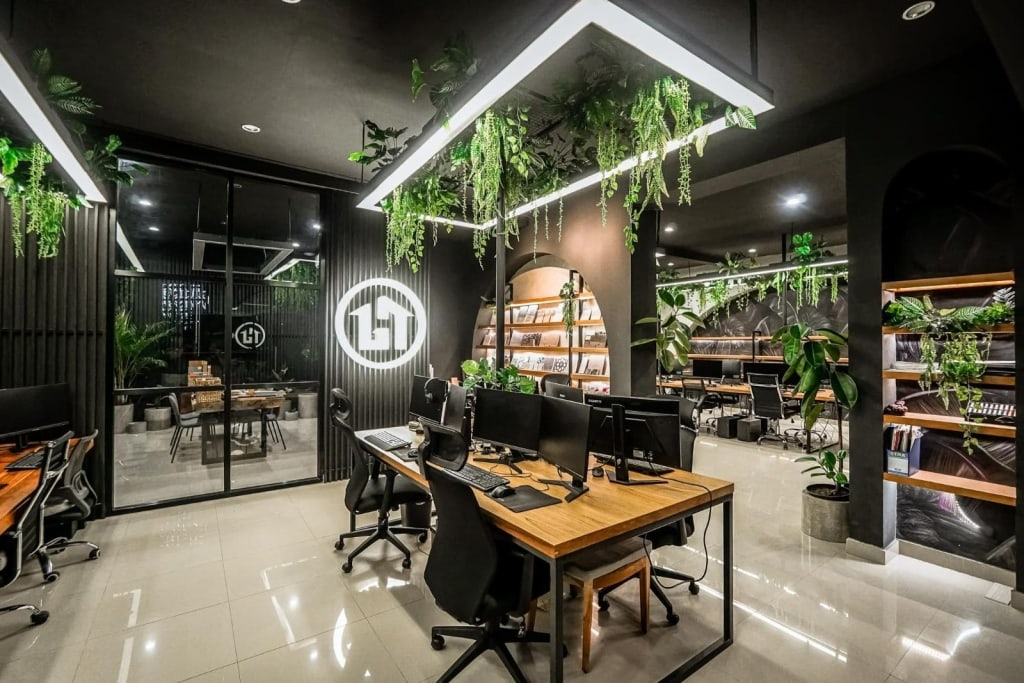
As a leading authority in the real estate industry, Balitecture provides complete assistance throughout the process. A team of experts specializing in A-Z property services is committed to helping you every step of the way.
Set a free consultation with us!
We also have you covered with extensive property listings. This includes Bali land for sale, villas for sale, villas for rent, and other properties available for lease and sale. Plus, villa management can help you make the most of generating income from your property.
Discover Bali villas for lease and sale here.
Discover Bali lands for lease and sale here.
Find the best features and benefits of villa management here.